

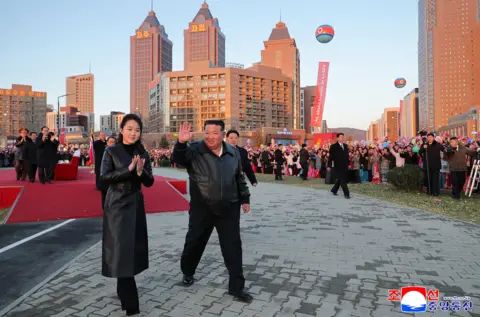
During pledges towards Seoul and declarations to develop the atomic arms arsenal, a central query lingered at the latest political assembly: might the leader's teenage daughter be anointed as the successor?
While conclusive announcement failed to emerge this week, it has sparked a widespread debate about the young girl's prospects as the prospective ruler of the populous state, a government solely ruled by the Kim family clan.
Growing Public Profile and Speculation
The teenager has become progressively visible in state media with her parent. Yet, a great deal about her continues to be unknown. North Korea has consistently refused to formally disclosed her name or verified her age.
Her existence was first made known internationally in 2013. Over the years, she is generally believed to be 13 years old, partly on agency assessments.
Evidence of Succession
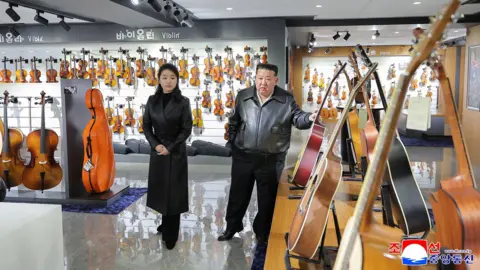
Experts point to several significant indicators. Her frequent TV spots—frequently centered in the shot—and the use of reverential terms usually set aside for the supreme leader are seen as strong indicators.
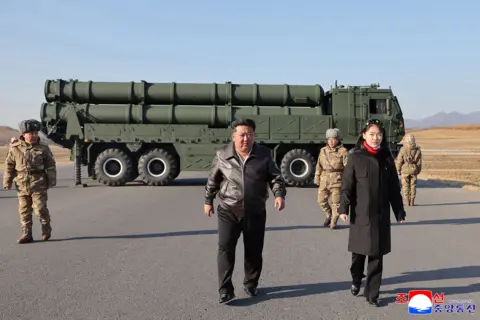
Moreover, her close association with the army is considered a further crucial factor. She has observed troops and missiles together with her father. On several occasions, senior officers have been photographed stopping next to her to confer at military events.
"The state media is using terminology set aside for the ruler. It reinforces her own iconic image," states one prominent expert.
Such strategic indoctrination is considered essential, as ultimate control in North Korea resides with control over the military. To be a effective heir, she must present herself as a competent commander.
Controversy Over Gender and Custom
Nevertheless, a significant opposing view persists. Some former officials believe that North Korea's profoundly traditional culture presents an insurmountable barrier for a female supreme leader.
It is noted that females at every rank find it hard for equal recognition. Women commanders in top positions are extremely uncommon. Common practices also highlight these norms.
"If they do, they end the journey then go to the back of their car and expectorate thrice to remove the bad luck," describes a former DPRK insider.
Shifting Cultural Norms
Alternatively, other observers contend that the role of women in North Korea has changed dramatically since the economic collapse.
Amid that crisis, as the state system weakened, women increasingly became the primary providers, pursuing black market business. This has allegedly led to a gradual shift in societal roles.
One researcher who has studied numerous escapees states that it is now no longer uncommon to see females in managerial roles within the state.

"We cannot think of North Korea with our perspective. We must imagine them as the royal court," says the analyst. "Who would have the audacity to defy someone of Kim blood who is taking the supreme position?"
Succession Calculations
Current party developments are also being analyzed. The promotion of Kim Yo Jong, the leader's sister, to a key ideological role is seen by some as a move to install a protector for the young heir.
In the end, analysts are in disagreement. Some see the focus on Ju Ae as a deliberate move to humanize the leader's image and signal another family transfer of power. Others insist the signals of her preparation are far too clear to ignore.
Irrespective, the debate itself may serve a purpose for the Pyongyang, maintaining global focus firmly trained on the isolated Kim family dynasty.


